01 — CONTEXT & INVESTMENT CHALLENGE
Reconsidering the Long-Term Heat Supply for an Entire Residential Quarter.
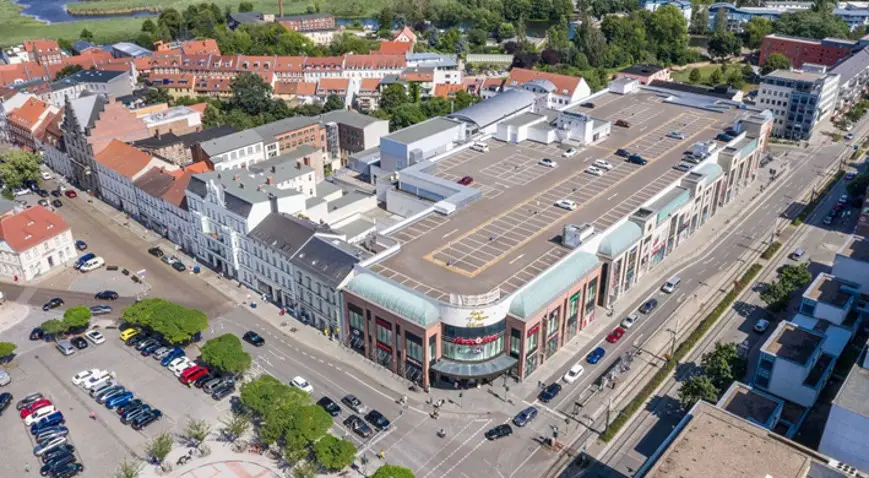
St. Annen in Brandenburg an der Havel is a major private residential development comprising approximately 450 apartments.
The investment challenge was to determine whether the quarter’s conventional heat supply could be transitioned to a renewable energy solution. This required technical feasibility, energy demand, investment economics and the future commercial supply structure to be considered together.
02 — TECHNICAL SCOPE & KEY MEASURES
Developing a Central Renewable Heating Solution.
A central wood-pellet heating system was developed as the basis for supplying renewable heat across the residential quarter.
The technical work included assessment of heat demand, feasibility analysis, pre-design and definition of the proposed energy-supply system. This established the technical basis for evaluating the renewable supply concept as a long-term infrastructure investment.
03 — INVESTMENT APPROACH
Translating a Renewable Energy Concept into an Investment Decision.
The proposed energy-supply pathway was evaluated across CAPEX, OPEX, profitability, lifecycle costs and Total Cost of Ownership, alongside its technical feasibility and long-term operating requirements.
The analysis was translated into the decision basis for the Investment Committee and Geschäftsführung, connecting the proposed technical solution with its economic and commercial implications.
The investment approach also considered the ESCO-based heat-supply model and contractual structure required to implement and operate the renewable energy solution.
04 — INVESTMENT CASE & OUTCOME
Converting the Quarter to Renewable Heat Supply.
In 2008, the residential quarter’s heating supply was converted to renewable energy using a central wood-pellet heating system.
The project established a renewable heat-supply solution across approximately 450 apartments, demonstrating how residential decarbonisation can extend beyond individual building measures to the energy infrastructure serving an entire quarter.
The ESCO structure connected the infrastructure investment with the commercial model for long-term heat supply.
05 — ROLE OF WINFRIED HAAS
From Investment Analysis to Commercial Energy-Supply Structure.
Winfried Haas held responsibility for the project during his tenure as Department Head and authorised signatory (Prokurist) with a German Energy Service Company.
His role included development of the technical energy-supply concept and Investment Analysis across CAPEX, OPEX, profitability, lifecycle costs and Total Cost of Ownership, translating these into the decision basis for the Investment Committee and Geschäftsführung.
He also prepared the commercial proposal and negotiated it with the client, connecting the technical concept with the economic and contractual basis required for implementation.
06 — RELEVANCE FOR OWNERS TODAY
Changing the Energy Source Is an Investment Decision.
Alternative energy-supply pathways should be evaluated not only by their carbon impact, but across CAPEX, OPEX, lifecycle economics, operating requirements and long-term implications for the asset.
Explore Net Zero Investment Pathways →
REQUEST A CONFIDENTIAL DISCUSSION →