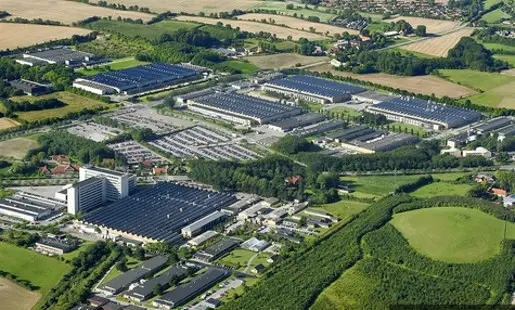
In 2022, the 250,000 m² Nordborg factory site reached carbon neutrality. See how it works.
01 — CONTEXT & INVESTMENT CHALLENGE
Establishing the Technical Basis for Industrial Decarbonisation.
Danfoss pursued a long-term decarbonisation pathway across its industrial operations, combining energy efficiency, energy recovery and the transition towards lower-carbon energy supply.
Within this wider transformation, EN 16247 Energy Audits were undertaken across three major facilities: the Nordborg headquarters and production campus and Gråsten production site in Denmark, together with the Flensburg production facility in Germany.
The objective was to establish where and how energy was consumed and identify technical opportunities for improving energy performance across complex industrial environments.
02 — TECHNICAL ASSESSMENT SCOPE
Examining Energy Demand Across Buildings, Utilities and Production.
The audits combined energy-consumption analysis with on-site assessment of major technical systems and operating conditions.
The scope covered heat and thermal energy supply, cooling and refrigeration, HVAC and ventilation, electrical systems and drives, compressed air, controls, lighting and production-related energy consumers.
This provided a structured technical basis for identifying energy-efficiency opportunities across buildings, energy infrastructure and industrial processes.
03 — ASSESSMENT APPROACH
Moving from Energy Consumption to Actionable Efficiency Opportunities.
The EN 16247 methodology provided a systematic approach to understanding energy use, assessing major consumers and identifying where technical improvements could reduce demand.
At Nordborg, Winfried Haas participated in the expert engineering team assessing the approximately 250,000 m² headquarters and production campus.
At Gråsten and Flensburg, he was responsible for the Energy Audits, assessing major energy consumers, technical infrastructure and operating conditions across the production facilities.
04 — RECOMMENDATIONS & OUTCOME
Energy Efficiency as the Starting Point for a Wider Transformation.
The audits established technical evidence for identifying energy-efficiency opportunities across three industrial production sites.
Within the wider Danfoss decarbonisation strategy, the transformation logic extended beyond efficiency alone: reducing energy demand, recovering and re-using available energy flows, and addressing remaining requirements through lower-carbon and renewable energy supply.
The Nordborg campus subsequently achieved Scope 1 and 2 carbon neutrality in 2022. This represents the wider Danfoss transformation and is not presented as an outcome attributable to these Energy Audits or to Winfried Haas.
05 — ROLE OF WINFRIED HAAS
Technical Energy Assessment Across Complex Industrial Facilities.
The EN 16247 work was undertaken during Winfried Haas’s tenure as Senior Consultant with a German energy services contractor.
He was responsible for the Energy Audits at the Gråsten and Flensburg production sites and participated as a member of the expert engineering team auditing the Nordborg headquarters and production campus.
His role focused on assessing energy consumption, major technical systems and energy-efficiency opportunities, providing technical evidence relevant to subsequent energy and decarbonisation planning.
06 — RELEVANCE FOR OWNERS TODAY
Understand Demand Before Changing Supply.
A credible Net Zero Investment Pathway starts with understanding where energy is consumed and where demand can be reduced before determining how the remaining requirement should be integrated and re-sourced.
Explore Net Zero Investment Pathways →
REQUEST A CONFIDENTIAL DISCUSSION →
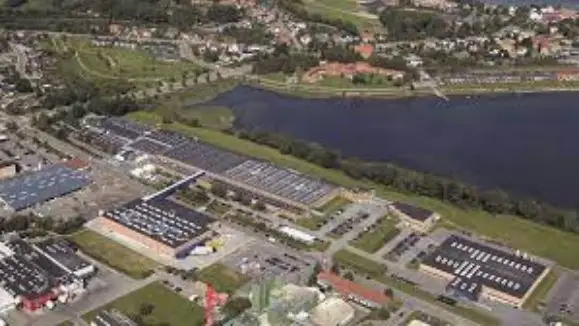
Gråsten — Industrial Production – Denmark
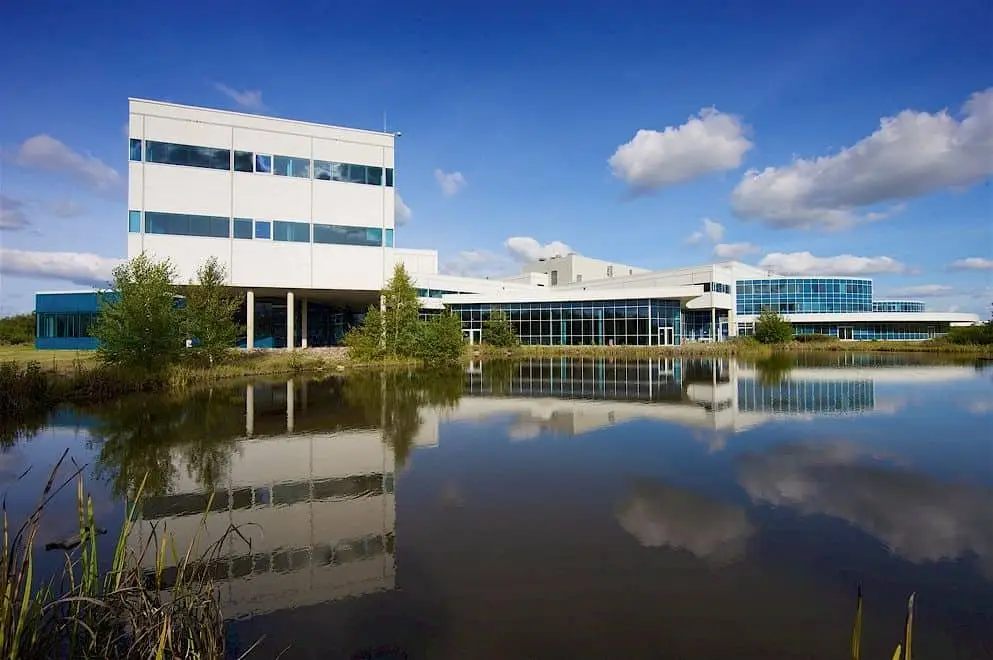
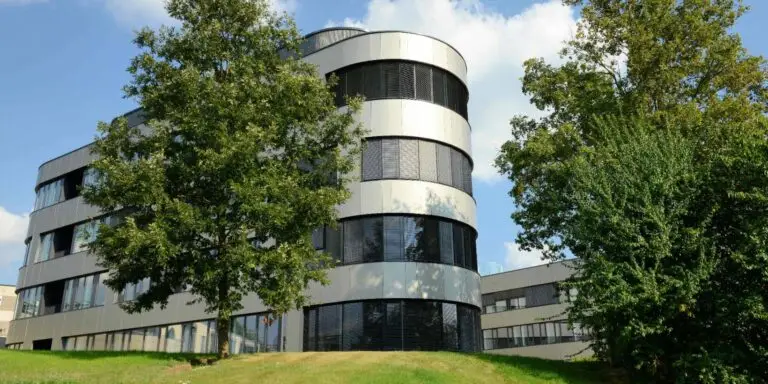
Flensburg — Industrial Production – Germany