01 — CONTEXT & INVESTMENT CHALLENGE
Improving the Planned Investment Without Increasing Capital Cost.
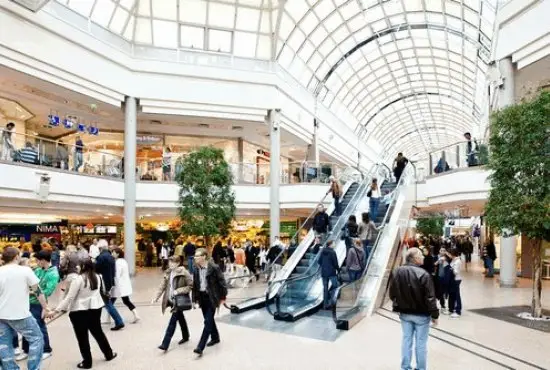
During a major refurbishment of ELBE Shopping Mall in Hamburg, a new cooling plant had already been planned to meet the requirements of the extensively modernised retail asset.
The investment challenge was whether the proposed solution could be improved before capital was committed. The objective was to achieve higher cooling efficiency and lower long-term operating costs without increasing the planned investment.
02 — TECHNICAL SCOPE & KEY MEASURES
Redesigning the Cooling Plant Around Higher-Efficiency Chillers.
The planned cooling concept was reassessed across chiller efficiency, equipment selection, system configuration and operating requirements.
Alternative chiller solutions were evaluated against the required cooling loads and technical requirements. The resulting concept replaced the originally proposed solution with higher-efficiency chillers while remaining within a comparable capital investment.
03 — INVESTMENT APPROACH
Comparing CAPEX and Lifecycle Cost — Not Equipment Cost Alone.
Alternative cooling solutions were evaluated against both initial investment requirements and expected operating performance.
The assessment considered equipment efficiency, CAPEX, expected energy consumption, operating costs and lifecycle economics. This demonstrated that higher energy efficiency did not necessarily require additional capital: an alternative technical solution could provide better long-term economics at comparable CAPEX.
The investment decision therefore moved beyond equipment selection towards the Total Cost of Ownership of the cooling infrastructure.
04 — INVESTMENT CASE & OUTCOME
Higher Efficiency at Comparable CAPEX.
The selected cooling solution delivered the central investment objective: higher energy efficiency without increasing the planned capital investment.
Higher-efficiency chillers at comparable CAPEX reduced expected energy costs and OPEX over the operating life of the cooling plant. The investment therefore improved expected Total Cost of Ownership and lifecycle economics without requiring additional upfront capital.
No quantified energy-saving or OPEX-reduction figure is available from the provided project information, so no specific percentage is claimed.
05 — ROLE OF WINFRIED HAAS
From Technical Redesign Through Commissioning and Acceptance.
Winfried Haas was responsible for the technical redesign of the energy-efficient cooling solution and specialist site supervision during implementation.
His responsibility extended through equipment evaluation and selection to installation, commissioning and final acceptance. This legacy engagement therefore included direct technical responsibility for translating the revised efficiency concept into the implemented cooling plant, rather than advisory assessment alone.
06 — RELEVANCE FOR OWNERS TODAY
The Specified Solution Is Not Necessarily the Investment Optimum.
Alternative technical configurations can deliver stronger energy performance and lifecycle economics without necessarily increasing CAPEX. Owners should therefore test technical assumptions and Total Cost of Ownership before committing capital to major infrastructure renewal.
REQUEST A CONFIDENTIAL DISCUSSION →