01 — CONTEXT & INVESTMENT CHALLENGE
Improving Energy Performance in a Continuously Operating Terminal.
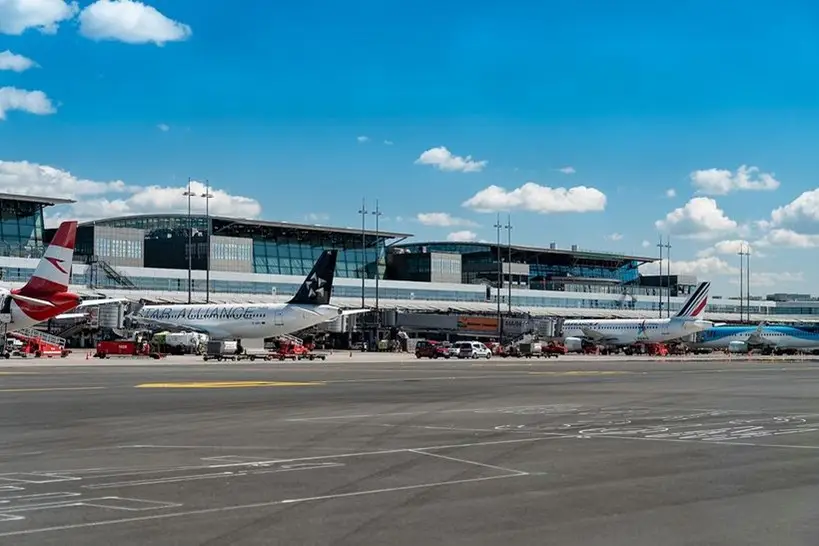
Terminal 1 at Hamburg International Airport required the energy-efficient modernisation of major Air Handling Units while maintaining continuous airport operations.
The investment challenge extended beyond reducing energy consumption and operating costs. The ventilation systems formed part of critical terminal infrastructure, requiring the retrofit to protect indoor conditions, system reliability and operational continuity throughout implementation.
02 — TECHNICAL SCOPE & KEY MEASURES
Upgrading Major Air-Handling Systems with High-Efficiency Fan Technology.
The technical scope centred on major Air Handling Units serving Terminal 1. A retrofit concept was developed to upgrade the existing systems with 20 high-efficiency fan technology.
An energy consumption and emissions baseline established the reference for assessing performance and identifying efficiency opportunities. The technical concept incorporated the operating constraints of the terminal, where ventilation services had to remain available throughout the retrofit.
03 — INVESTMENT APPROACH
Balancing Energy Performance with Operational Requirements.
The retrofit was developed around two connected requirements: improving energy performance while maintaining reliable terminal operations during implementation.
The established baseline provided the performance basis for the proposed investment. The approved concept was subsequently translated into technical tender documentation for modification of the existing AHUs.
Implementation requirements were incorporated into the technical approach so that the planned efficiency improvements could be delivered within the operational constraints of critical airport infrastructure.
04 — INVESTMENT CASE & OUTCOME
Reducing Energy and Operating Costs Under Live Conditions.
The retrofit resulted in lower energy consumption and operating costs, together with reduced maintenance requirements for the upgraded air-handling systems.
These improvements were achieved while maintaining the operational continuity required within Terminal 1. The project therefore combined energy-performance improvement with controlled renewal of critical building infrastructure under live operating conditions.
No quantified verified energy or cost reduction is available from the provided project information, so no specific percentage is claimed.
05 — ROLE OF WINFRIED HAAS
From Energy-Efficiency Concept Through Technical Implementation.
Winfried Haas was responsible for the energy-efficiency concept, energy and emissions baseline, technical tender documentation and construction supervision of the AHU retrofit.
His responsibility extended from assessment and retrofit definition through technical oversight during implementation. This legacy engagement included detailed technical and construction responsibilities that are outside the scope of current HAAS Perspective owner-side advisory mandates.
06 — RELEVANCE FOR OWNERS TODAY
Operational Risk Is Part of the Investment Decision.
For critical assets, retrofit alternatives should be evaluated not only against energy performance and OPEX, but also against implementation risk, operational continuity and the resilience requirements of the asset.
REQUEST A CONFIDENTIAL DISCUSSION →