01 — CONTEXT & INVESTMENT CHALLENGE
Prioritising Energy Investment Across an Existing Industrial Site.
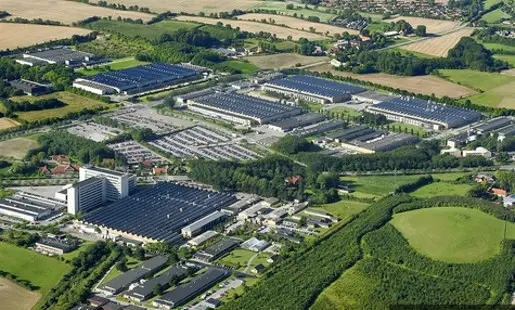
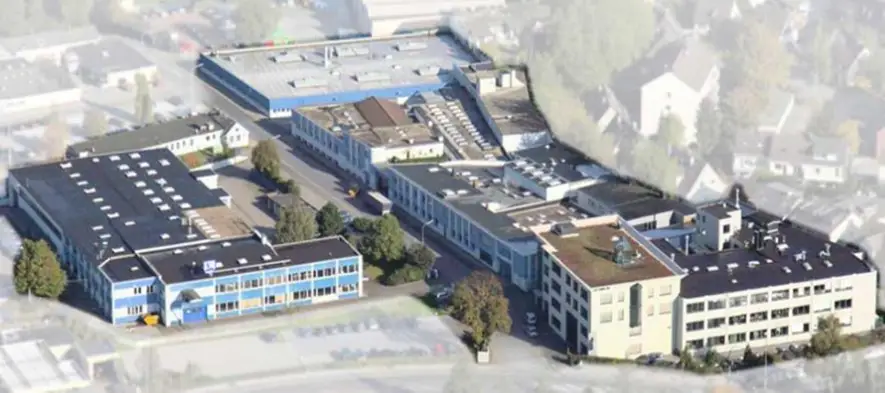
Woelm GmbH operates an approximately 25,000 m² manufacturing site in Heiligenhaus, Germany, with multiple production buildings and energy-intensive technical infrastructure.
The challenge extended beyond identifying individual efficiency measures. Ageing heating and compressed-air systems required renewal, while alternative heating, cooling and ventilation concepts needed to be evaluated against energy performance, investment cost, operating economics and future requirements.
The assignment therefore developed over several stages into a broader assessment of how major energy infrastructure at the production site could be progressively modernised.
02 — TECHNICAL SCOPE & KEY MEASURES
Assessing Heating, Compressed Air and HVAC Infrastructure.
The technical work covered several major energy systems across the production site.
For the heating infrastructure, existing heat generation, distribution and use were assessed together with alternative renewal options, including different energy sources, efficient heating systems and potential heat recovery.
For compressed air, two separate and ageing generation systems were analysed. A new concept consolidated the networks and introduced a more efficient central generation strategy. The calculated electricity reduction was 44,506 kWh/year, equivalent to 56%.
For HELM Werk 2, a later feasibility study compared alternative concepts for heating, cooling, fresh-air supply and filtration, including conventional, hybrid and renewable-energy options.
03 — INVESTMENT APPROACH
Comparing Technical Alternatives Through Economics and Future Requirements.
Technical measures were evaluated not only for energy performance but also against investment requirements, operating costs, profitability and implementation constraints.
The compressed-air concept was evaluated across CAPEX, expected energy and operating-cost savings, profitability and payback. This translated the technical retrofit opportunity into a structured investment case, allowing energy performance and investment economics to be considered together.
The later heating and HVAC feasibility assessment compared alternative system configurations across estimated CAPEX, operating costs, available funding, production impact and future suitability. This enabled management to compare different infrastructure pathways rather than considering a single predefined technical solution.
04 — INVESTMENT CASE & OUTCOME
Creating a Structured Basis for Progressive Infrastructure Renewal.
The engagement produced a series of technical and economic decision bases for major energy systems across the production site.
For compressed air, the proposed system optimisation reduced calculated electricity demand around 50%.
For heating and HVAC infrastructure, alternative renewal pathways were developed and compared, allowing technical performance, capital requirements, operating economics and future energy options to be considered before implementation decisions were made.
The work also provided the technical documentation and Energy Savings Concepts required to access applicable public energy-efficiency funding.
05 — ROLE OF WINFRIED HAAS
Independent Technical Assessment and Investment Analysis.
Winfried Haas delivered the work as an independent Energy Consultant and authorised Energy Efficiency Expert.
His responsibilities included site and energy-system assessments, development of heating and compressed-air retrofit strategies, technical feasibility studies, comparison of alternative system configurations, energy and CO₂ analysis, investment-cost estimation, profitability assessment and preparation of Energy Savings Concepts.
He also developed the technical and economic documentation required for applicable funding programmes and supported the associated application process. For HELM Werk 2, his work extended to comparing alternative heating, cooling and ventilation pathways and presenting the resulting options for management consideration.
06 — RELEVANCE FOR OWNERS TODAY
Infrastructure Renewal Should Start with Alternatives — Not a Predetermined Solution.
Ageing energy systems create an opportunity to compare alternative Investment Pathways across energy performance, CAPEX, OPEX, lifecycle implications and future requirements before committing capital.
Explore Net Zero Investment Pathways →
REQUEST A CONFIDENTIAL DISCUSSION →