
01 — CONTEXT & INVESTMENT CHALLENGE
High Cooling Demand Created an Opportunity for Load Management.
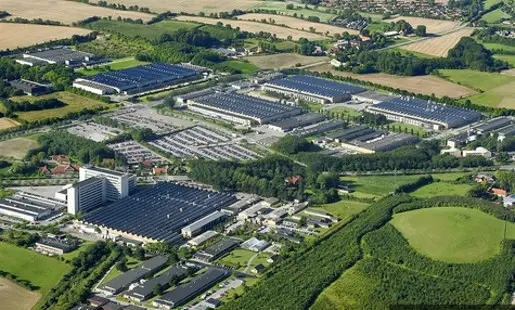
NorthC Deutschland GmbH operates data center infrastructure in Germany. At its Munich data center, high and dynamic cooling demand included pronounced peak loads, creating an opportunity to improve how cooling generation and demand were managed.
The project examined how peak loads and associated energy costs could be reduced while increasing cooling-system flexibility.
The investment challenge was to identify a technically viable and economically robust measure that could also meet the requirements of Germany’s Wettbewerb Energieeffizienz funding programme.
02 — TECHNICAL SCOPE & KEY MEASURES
Decoupling Cooling Generation from Peak Demand.
The technical assessment analysed the existing cooling infrastructure and load profiles to identify opportunities for cooling-load reduction and Demand Side Management.
The central measure was a chilled-water Thermal Energy Storage system. By storing cooling capacity and making it available when required, the system was designed to partially decouple cooling generation from immediate demand and reduce peak loads.
The concept also considered the integration of the storage system into the existing cooling infrastructure and its operational requirements.
03 — INVESTMENT APPROACH
Translating Demand Side Management into an Investment Case.
The proposed Thermal Energy Storage system was evaluated not only as a technical measure but also in terms of its energy and economic implications.
Winfried Haas developed an integrated Energy Efficiency Concept covering the cooling-load analysis, technical and energetic design of the storage measure and economic evaluation of the proposed investment.
The resulting Expert Report established the technical and economic basis for the funding application under Wettbewerb Energieeffizienz and provided a structured basis for the investment decision.
04 — INVESTMENT CASE & OUTCOME
A Structured Basis for Peak Load Reduction and Future Investment.
The completed concept established a technically defined approach for using Thermal Energy Storage to reduce cooling peak loads and increase operational flexibility.
The proposed system was designed to improve the relationship between cooling generation and demand while creating greater flexibility in when cooling energy is produced and used.
The project resulted in an auditable, funding-eligible technical and economic concept for the proposed investment.
No implemented or verified savings are stated here because the information provided supports the developed investment concept, but not yet measured post-implementation performance.
05 — ROLE OF WINFRIED HAAS
Technical and Economic Development of the DSM Concept.
Acting as a certified BAFA expert, Winfried Haas developed the Energy Efficiency Concept and Expert Report for the project.
His responsibilities included analysis of the cooling system and load profiles, identification of cooling-load reduction potential, technical and energetic development of the Thermal Energy Storage concept, economic evaluation of the measure and preparation of the funding-related Expert Report.
06 — RELEVANCE FOR OWNERS TODAY
Energy Storage Can Change When Infrastructure Needs to Meet Demand.
Thermal Energy Storage demonstrates why cooling investments should consider load profiles as well as annual energy consumption. Decoupling generation from demand can create additional options for peak-load management, infrastructure utilisation and future energy-system flexibility.
FROM PROJECT EXPERIENCE TO OWNER-SIDE ADVISORY
This project predates the current HAAS Perspective advisory business and reflects Winfried Haas’s earlier technical and investment experience. Today, HAAS Perspective provides independent owner-side advisory for major asset renewal and Net Zero transformation — from Investment Pathway evaluation through delivery assurance to performance validation.