01 — CONTEXT & INVESTMENT CHALLENGE
Prioritising Investment Across a Large and Diverse Property Portfolio.
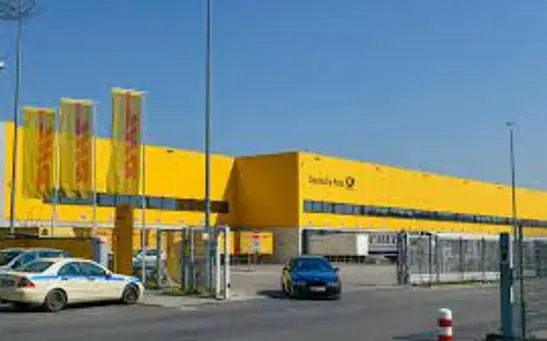
The programme covered approximately 800 commercial properties across Germany, owned by Lorac S.à r.l. and primarily occupied by Deutsche Post AG. The portfolio included logistics facilities, delivery centres and administrative buildings with different energy profiles and technical conditions.
The challenge was to identify where energy-efficiency investment could create the strongest opportunities and translate building-level potential into scalable investment priorities across a nationwide portfolio.
02 — TECHNICAL SCOPE & KEY MEASURES
Translating Asset-Level Opportunities into Retrofit Programmes.
A portfolio-wide assessment methodology was used to identify properties and technical systems with significant energy-efficiency and emissions-reduction potential.
Across selected assets, retrofit opportunities included HVAC systems, building automation and controls, and energy-efficient lighting. Measures were developed according to individual asset requirements and combined into performance-based retrofit packages.
03 — INVESTMENT APPROACH
Connecting Technical Potential with Economics, Financing and Risk.
Energy-efficiency opportunities were evaluated against capital requirements, energy savings, OPEX, investment returns, lifecycle costs and key investment risks. This enabled technical potential to be translated into a structured basis for prioritising investment across the portfolio.
The programme used an Energy Performance Contracting model in which the ESCO contractually guaranteed agreed energy cost savings. Energy-efficiency investments were refinanced through guaranteed and realised savings over the contract period.
The resulting investment structure therefore connected technical performance, financing and risk allocation with the actual performance expected from the assets.
04 — INVESTMENT CASE & OUTCOME
Scaling Performance-Based Investment Across Approximately 800 Properties.
The programme covered approximately 800 properties and contributed to an annual CO₂ reduction of approximately 17,000 tonnes, supported by contractually guaranteed energy savings.
The EPC structure integrated technical retrofit, investment economics, financing, performance obligations and subsequent measurement across a diverse nationwide portfolio.
The project received the European Energy Service Award 2012 in the category “Best Energy Service Project.”
05 — ROLE OF WINFRIED HAAS
Translating Portfolio Energy Potential into Investment Decision Support.
Winfried Haas was part of the contractor-side management team responsible for evaluating and developing the Energy Performance Contracting programme.
His role focused on the technical and investment analysis supporting the Investment Committee, including assessment of energy-saving potential and evaluation of CAPEX, OPEX, returns, lifecycle costs and investment risks. He also contributed to development of the Energy Management System and MRV approach used to monitor consumption and assess realised savings against the contractual baseline.
This legacy contractor-side role differs from today’s independent HAAS Perspective owner-side advisory mandate.
06 — RELEVANCE FOR OWNERS TODAY
Portfolio Capital Should Follow Investment Potential — Not Portfolio Uniformity.
Large portfolios require a structured way to identify which assets and interventions justify capital first. Asset-level technical potential needs to be translated into comparable investment priorities across economics, performance, risk and lifecycle implications.
Explore the HAAS Investment Decision Process →
REQUEST A CONFIDENTIAL DISCUSSION →